How a Nuclear Reactor Starts Up
A reactor engineer explains the approach to criticality: shutdown margin, estimated critical position, subcritical multiplication, the 1/M plot, startup rate and prompt criticality.
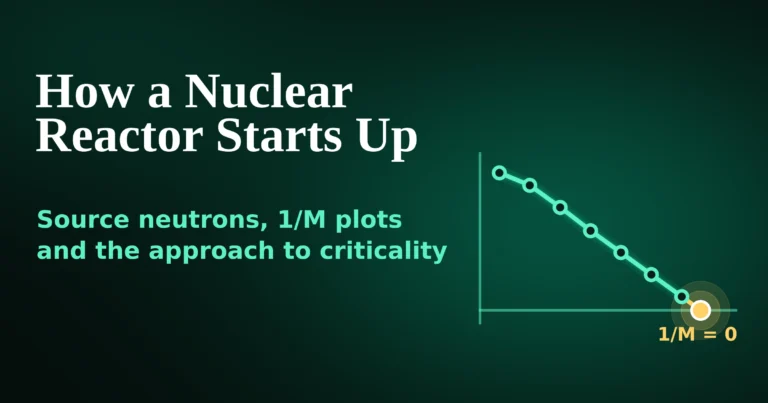
A reactor engineer explains the approach to criticality: shutdown margin, estimated critical position, subcritical multiplication, the 1/M plot, startup rate and prompt criticality.
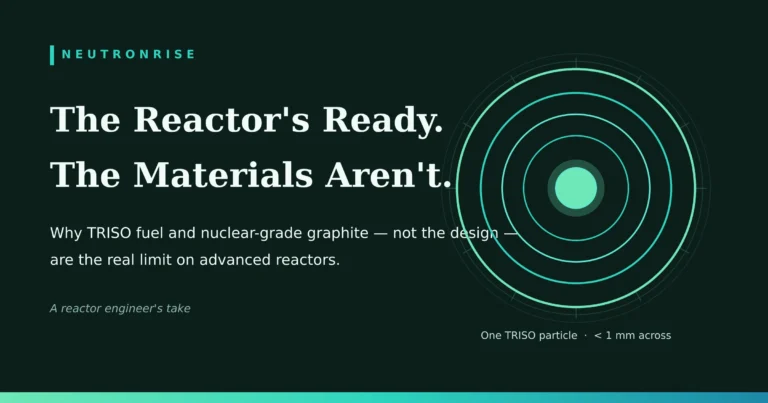
The reactor designs are ready. The fuel took twenty years to qualify, no graphite grade is code-qualified yet, and half a dozen other materials have no supply chain. A reactor engineer on why materials — not the reactor — are the real limit on advanced nuclear.
Search “NQA-1 certified supplier” and you get badges and brochures. Here’s where the one public list actually lives, how to verify a supplier’s QA program, and the red flags to catch before you buy — from a reactor engineer.
ISO 9001 and NQA-1 look like the same thing. They aren’t. A reactor engineer breaks down what each standard actually demands, why an ISO 9001 certificate won’t get you nuclear work, and where ISO 19443 fits, updated for the new ISO 9001:2026 edition.
There’s no NQA-1 certificate to buy. Getting qualified means building a quality program, generating real records, and passing an audit. A reactor engineer walks through the six steps, who audits you, and what the timeline and cost actually look like.
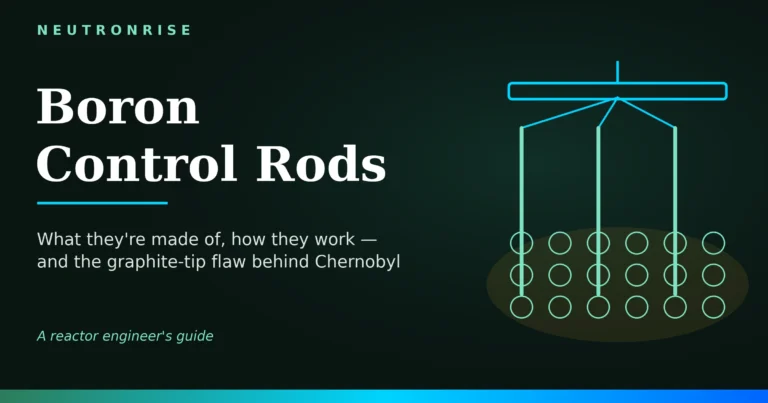
What boron control rods are actually made of, how PWR and BWR designs differ, and why a graphite-tipped rod turned Chernobyl’s emergency shutdown into a power surge — from a working reactor engineer.
A nuclear microreactor is small enough to build in a factory and ship on a truck. A reactor engineer explains what it is, how it differs from an SMR, and whether the trucks will really roll.
Commercial grade dedication is how an off-the-shelf part earns its place in a nuclear safety system. A reactor engineer breaks down the two-part process, the four acceptance methods, critical characteristics, and where buyers and suppliers get it wrong.
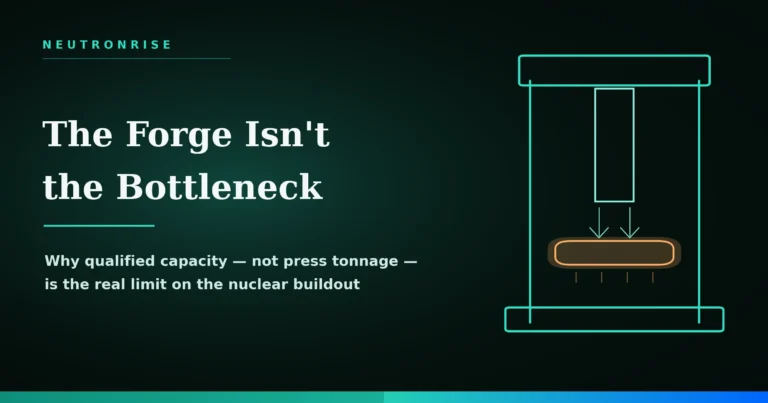
Everyone names the forging press as the nuclear supply chain bottleneck. It isn’t. The press tonnage exists across six countries — what’s scarce is qualified capacity: the NQA-1 machining, welding, inspection, and records work that turns a raw forging into a component a regulator will actually accept.
Most people mix up NQA-1 with 10 CFR 50 Appendix B. Here’s what the ASME nuclear quality-assurance standard actually is, how the two connect, and why it makes a nuclear component cost far more than its industrial twin.