A Reactor the Size of a Room Just Woke Up in Idaho — Here’s What That Means
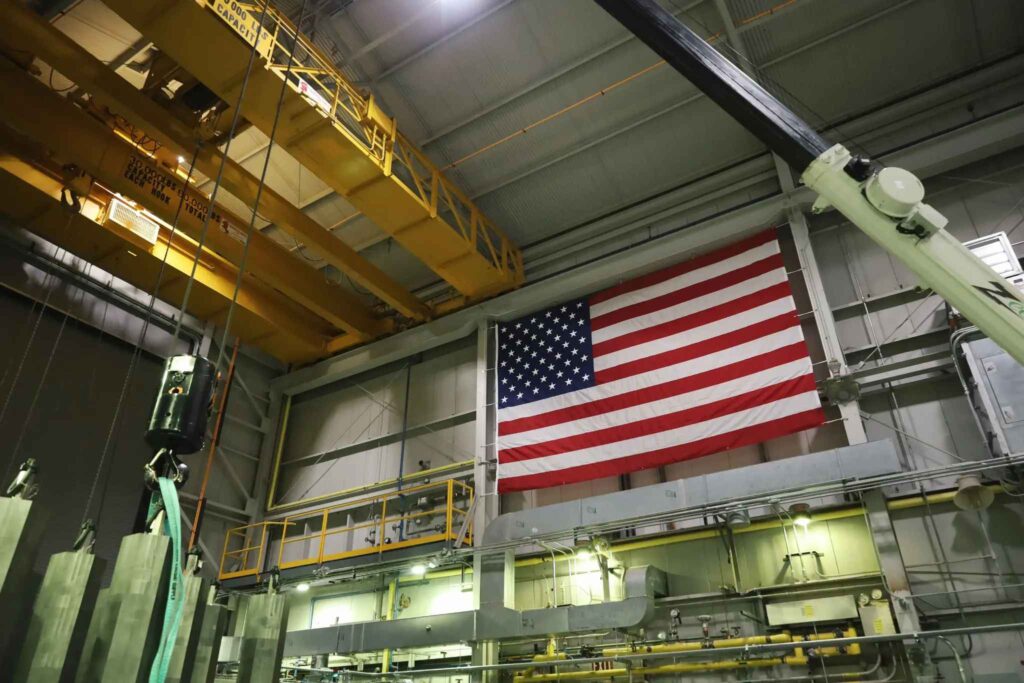
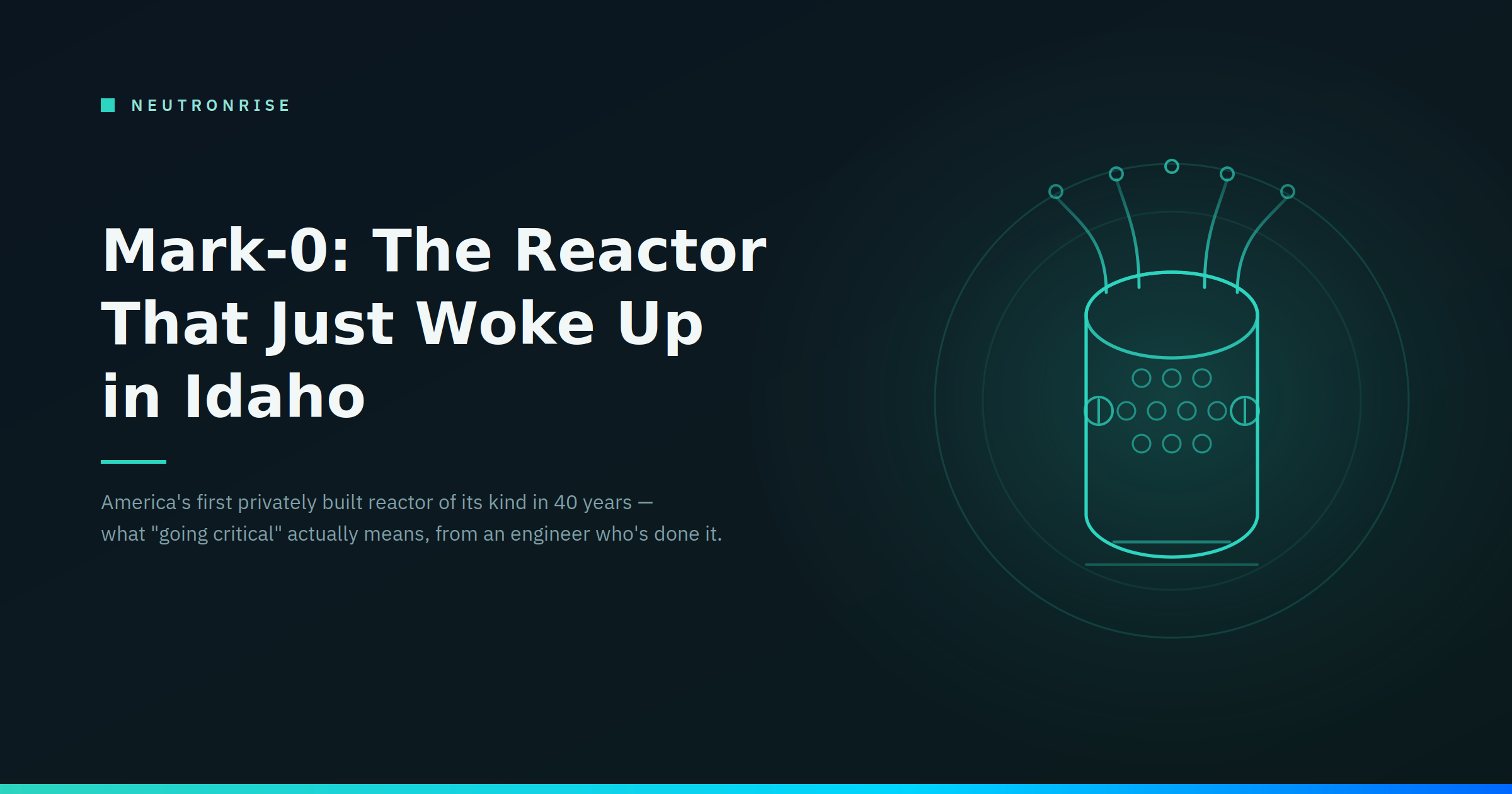
On the afternoon of June 04, 2026, in a test building at Idaho National Laboratory, a small machine called Mark-0 reactor did something no privately built reactor of its kind had done on American soil in over forty years: it came alive.
Mark-0 was built by a California startup named Antares Nuclear that didn’t exist four years ago. At around half past noon, engineers coaxed it to “criticality” the moment a nuclear chain reaction becomes self sustaining. It made no electricity. It barely got warm. And yet energy secretaries and lab directors lined up to call it historic.
If you read the news coverage, you came away knowing that it happened. What almost nobody explained is what any of it means, what criticality actually is, why a reactor that makes no power matters, how a machine this small cools itself with no pumps and why the U.S. government set a literal Independence Day deadline for it.
So let’s do that. I’ll walk through it the way I’d explain it to a sharp friend who isn’t a nuclear engineer and in a couple of places, the way I’d explain it from inside the control room.
What Just Happened In IDAHO
Here are the bare facts, stripped of the press release gloss.
Antares brought its Mark-0 reactor to zero power fueled criticality at Idaho National Laboratory’s Reactor and Critical Experiment (RACE) facility, On June 04, 2026 at around 12:30 p.m. MDT local time. It was the first privately developed, non-light-water reactor to go critical in the United States in more than four decades.
It was also the 53rd reactor built at the INL site since 1951, a place that has been America’s reactor proving ground since the dawn of the atomic age and the first genuinely new reactor design to go critical there in more than half a century.
It was the first reactor to reach this milestone under a new federal effort called the DOE Reactor Pilot Program, created by Executive Order 14301 in May 2025, which had challenged the industry to get at least three advanced reactors critical by July 4, 2026.
Antares cleared it first, a full month early and by the deadline, three DOE authorized reactors in total had gone critical, with Valar Atomics‘ minivan-sized Ward 250 followed on June 22 and Deployable Energy’s Unity made it with barely a day to spare, going critical late on June 30.
That’s the headline. Now the interesting part because almost every word in those paragraphs is hiding a concept worth understanding.
What “Criticality” Actually Means (and Why “Zero-Power” Matters)
The word criticality sounds alarming. In everyday English, “critical” means dangerous, dire, on the edge. In reactor operation physics it means something much calmer and more precise: the chain reaction is now self-sustaining, balanced, holding steady on its own.
Here’s the picture. Inside the reactor core, uranium atoms split, fission, and each split throws off neutrons. Those neutrons can strike other uranium atoms and split them in turn, releasing more neutrons, and so on. The whole game of running a reactor is controlling that cascade.
If, on average, each fission goes on to cause exactly one more fission, the reaction sustains itself at a constant level. Reactor engineers write that balance in terms of neutron’s effective multiplication factor as k-effective = 1. Below it, the reaction fizzles out (k-eff < 1) subcritical; above it (k-eff > 1) , it grows supercritical. Critical is the goal, not the danger (the physics of taking a reactor critical for the first time) it simply means the reactor is on, ticking over steadily like an idling engine.
This is where I can speak from my own side of the work, because verifying a freshly loaded core is a big part of what I do and it reframes what “going critical” really signifies.
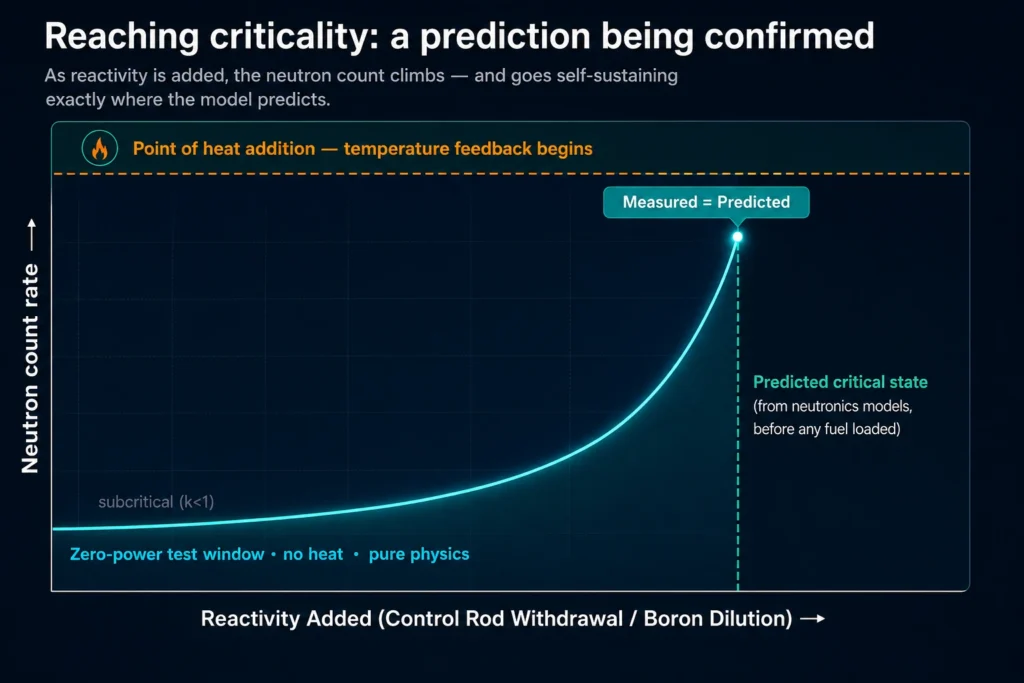
When a core is fresh, criticality isn’t the achievement in itself, it’s a prediction being confirmed. Long before any fuel is loaded, the nuclear designers run the neutronics calculations and produce very specific predictions about exactly what control state the reactor should first go critical at.
The test exists to check the hardware against the math. If the reactor goes critical precisely where the design predicts, your models are trustworthy and you can keep going. If it doesn’t, you stop and find out why before doing anything else. That predicted versus measured check is the real heart of an initial criticality.
In the commercial pressurized-water reactors (PWRs) I work on, that prediction is expressed in terms of critical boron concentration and control rod position, how much boron is dissolved in the primary coolant and where the rods sit, at the instant the chain reaction first balances at k-eff = 1. We bring the reactor up slowly, watch the neutron count climb through 1/M curve and confirm that criticality arrives right where the design promised.
And here’s a subtlety the news coverage will never tell you, but which is the entire reason these tests are run at hot zero power. Once a reactor is critical, you can add a small amount of positive reactivity to nudge power upward. As power rises, at some point the fuel starts getting measurably hotter and begins transferring heat to the reactor coolant, the point of addition of heat (POAH) also known as Doppler Heating Point.
That point matters enormously, because it’s where the reactor’s temperature feedbacks switch on: as the fuel heats, its reactivity shifts (the Doppler effect, among others) and the reactor begins pushing back against you. That’s the reason light water reactors LWRs are by design inherently safe because they have negative temperature coefficient of reactivity.
For low power physics testing (LPPT), some utilities name them hot zero power (HZP) physics tests , those feedbacks are the enemy. The whole goal is to verify the static nuclear design, the pure, as designed neutronics without dynamic temperature effects muddying the measurement.
So one of the first things you establish is the upper limit: the power level at which heat addition from nuclear fuel to reactor coolant and feedback begin. Then you deliberately stay below it, taking every measurement in that clean window where the physics is uncomplicated by temperature. That is precisely what “zero power” buys you.
And initial criticality is only the opening act. On a PWR, the low power physics test program, the industry standard here is ANSI/ANS-19.6.1, the reload startup physics test standard, is a whole battery of confirmations: measuring the critical boron concentration, mapping the core power distribution to prove the fuel was loaded symmetrically with no assembly misloaded, measuring the moderator temperature coefficient (MTC), measuring control rod worths and measuring the various reactivity coefficients.
Each one is an experimental check that the real core matches the core on paper. Only when the measurements agree with the predictions do you proceed toward power.
Having performed these startup physics tests myself, what stands out most isn’t the complexity it’s the discipline. Over roughly a day and a half, every important measurement is compared against the predicted values. If something doesn’t make sense, you stop and understand why. In reactor operations, confidence doesn’t come from assumptions; it comes from measurements.
Mark-0’s version of all this is leaner, and it looks different because it’s a fundamentally different kind of reactor. There’s no boron dissolved in a coolant to measure, because there’s no water coolant at all; it’s cooled by sodium heat pipes.
There are no control rods sliding into the core in the familiar way; reactivity is held by rotating drums of boron carbide a design borrowed from space reactors, turned by independent motors. The moderator isn’t water either; it’s the graphite block the fuel sits in. So the PWR specific measurements I just described don’t map across one for one. Mark-0’s startup physics is its own animal.
But the underlying logic is identical, and that’s the part worth holding onto: bring the reactor to criticality exactly where the neutronics models predicted for Mark-0, at a predicted control drum angle rather than a boron concentration, confirm that design matches reality and do it all at zero power, barely warm and well below any heat addition feedback, so you are testing the pure physics and nothing else.
That is what “zero power fueled criticality” means, and why it is the right, careful first step rather than an anticlimax.
One small precision, because I’d rather be exact: Mark-0’s milestone was a zero power criticality, which isn’t quite the same as the hot zero power condition we use on a PWR, where the plant is at operating temperature but generating no power. Mark-0 has no heat removal system at all, it’s effectively a cold critical assembly built purely to validate physics. The spirit is the same; the conditions differ.
If you want the one sentence version: it’s like turning an engine over for the very first time. The engine catches, idles, and proves it runs exactly as designed but you haven’t driven anywhere yet. Mark-0 is the engine turning over. Driving the car comes later.
Microreactor, SMR, or Full-Size Reactor — What’s the Difference?
You’ll see Mark-0 called a “microreactor,” and you’ve probably also been hearing “SMR” small modular reactor everywhere lately. They’re related but not the same and the difference is mostly about size.
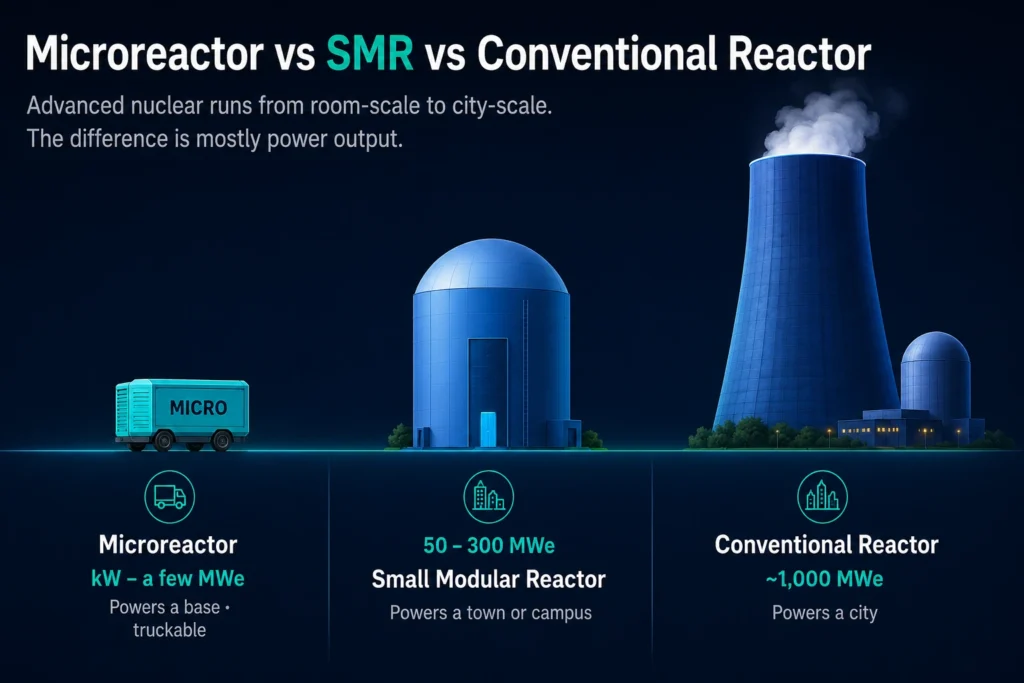
Think of it as a ladder of output, measured in megawatts of electricity (MWe). A conventional power reactor, the big domes you picture produces something like 1,000 MWe, enough for a city.
A small modular reactor is a deliberately shrunk, factory built version, typically in the rough range of 50 to 300 MWe enough for a town, a large campus, or an industrial site. A microreactor is smaller still: think kilowatts to a handful of megawatts.
Antares’ commercial design, the R1 that Mark-0 is paving the way for, is aimed at roughly 100 kilowatts up to around a megawatt enough to power a remote base or a disaster shelter and small enough to be trucked in on the back of a vehicle.
That tiny size is the entire point. A microreactor isn’t trying to power a city. It’s trying to be a self-contained, transportable power source you can drop somewhere the grid doesn’t reach and have it run for years without refueling.
Antares talks about its commercial unit running several years between refuelings, its published figures put it in the three to five year range, with no grid connection required. So Mark-0 is a microreactor, which you can think of as the smallest rung of the broader “small reactor” movement that SMRs belong to.
How a Heat-Pipe Reactor Cools Itself With No Pumps
This is the part I find genuinely elegant, and it’s where Mark-0 differs most sharply from almost everything else.
Every reactor has to move heat out of its core, that’s non-negotiable. In a conventional plant, that job falls to giant pumps pushing water (or, in a reactor like TerraPower’s Natrium, liquid sodium) through the core and out to where the heat is used. Pumps work, but pumps are machines: they need power, they have moving parts, and they can fail.
Antares’ reactors don’t use pumps at all. They use heat pipes. A heat pipe is a beautifully simple device ,a sealed steel tube with a small amount of liquid metal (here, sodium) inside and no moving parts whatsoever.
Heat from the core boils the sodium at one end, turning it to vapor. The vapor rushes to the cooler end of the tube, gives up its heat, and condenses back into a liquid. That liquid then wicks its way back to the hot end through a fine internal structure, capillary action, the same effect that pulls water up a paper towel and the cycle repeats, over and over, entirely on its own.
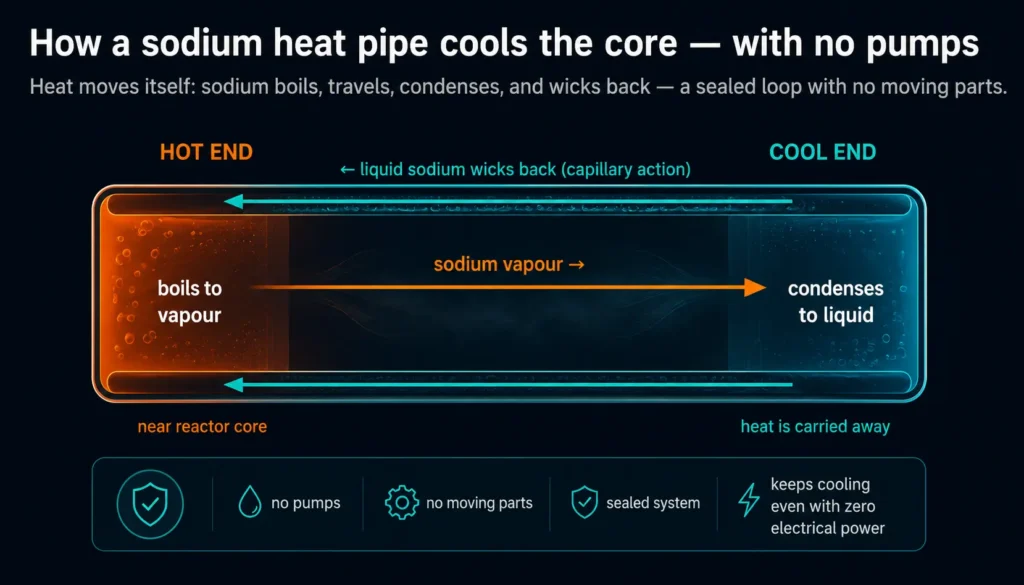
There’s no pump, no motor, nothing to switch on. The heat moves itself. Pack a core full of these tubes and you have a reactor that carries its own heat away using nothing but the physics of evaporation and condensation.
And because there’s no pump to lose, the cooling keeps working even in a complete loss of electrical power, exactly the kind of passive, self-reliant safety that makes engineers smile.
If you read my piece on the Natrium reactor, this will sound familiar in spirit. Natrium leans on natural convection of liquid sodium to cool itself when the pumps stop. Mark-0 takes the same “let physics do the work” philosophy and pushes it even further: it never relied on pumps in the first place.
The Fuel: What HALEU and TRISO Actually Are
Two pieces of jargon dominate the Mark-0 story, and both are worth understanding because they’re central to why this reactor is considered so safe.
The first is HALEU high assay low enriched uranium. Natural uranium is overwhelmingly the isotope U-238, with less than 1% of the fissile U-235 that actually sustains a chain reaction.
Conventional reactors enrich their fuel to around 3 to 5% U-235. HALEU is enriched higher up to just under 20% which lets a reactor be smaller and run longer between refuelings. That higher enrichment is a big part of what makes a microreactor possible at all; you’re packing more fissile punch into a tiny core. That same tiny core is also where the waste tradeoff bites hardest, a smaller core leaks more neutrons, which can raise its waste footprint per unit of energy
It’s also why HALEU supply is a recurring bottleneck for the whole advanced reactor industry, there simply isn’t much of it being made yet. Antares has moved early on exactly this problem, signing what Urenco calls the world’s first multi year commercial HALEU contract to lock in Western supply beyond the federally allocated material it has been drawing on, though the UK facility that will produce that fuel isn’t due online until 2031.
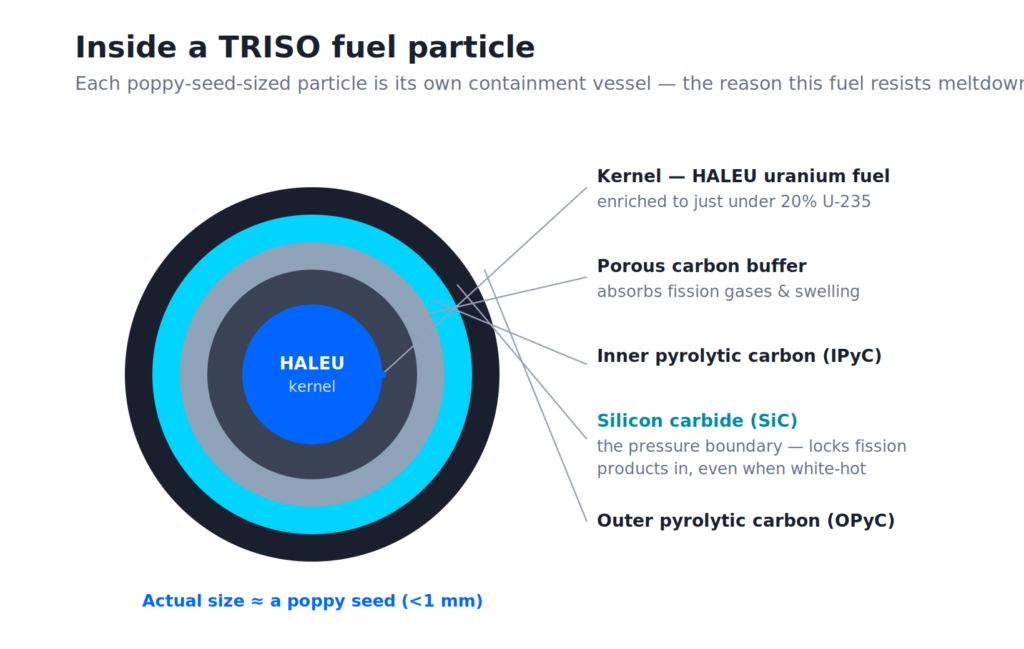
The second is TRISO tri-structural isotropic fuel and this is the clever bit. Instead of conventional fuel rods, TRISO fuel comes as tiny poppy-seed-sized kernels of uranium, each one individually wrapped in multiple layers of carbon and ceramic.
Each particle is its own miniature containment vessel, engineered to hold the radioactive fission products inside even at temperatures hotter than the reactor could realistically ever reach.
The result is a fuel that is, by its very construction, extraordinarily resistant to melting down, you can’t have a meltdown in the classic sense when every fuel particle is its own armored shell. In Mark-0, these TRISO particles are packed into a solid block of graphite (a “prismatic” core) and the fuel itself was manufactured by BWX Technologies in Lynchburg, Virginia.
Put the two together HALEU for compact, long lived energy density, TRISO for fuel that contains itself and you have the foundation of why these microreactors are designed to be walk-away safe.
Mark-0 vs Natrium: Two Very Different Bets on Advanced Nuclear
If you’ve read my Natrium explainer, you might be wondering how these two fit together, because they keep showing up in the same conversation about “advanced reactors.” They’re worth comparing, because they’re almost opposite answers to the question of what nuclear’s future looks like.
Both are non-light-water reactors, they break from the pressurized water design that has dominated for seventy years. Both lean hard on passive, physics based safety. Both use sodium and HALEU fuel. And both have deep roots at Idaho National Laboratory, where America has tested reactor ideas since 1951.
But the scale and purpose could hardly be more different. Natrium is a grid scale machine, hundreds of megawatts, built on the bones of a retiring coal plant, designed to store energy in molten salt and surge power onto the grid like a giant battery.
Mark-0’s commercial successor is a microreactor a thousand times smaller, meant to be trucked to a remote base and quietly power it for years. Natrium cools itself with a vast pool of circulating sodium; Mark-0 cools itself with sealed sodium heat pipes and no pumps at all. One is reinventing the central power station. The other is reinventing the idea that you need a central power station in the first place.
That’s the real story of advanced nuclear right now: it isn’t one technology, it’s a whole spectrum of bets, from city scale down to room scale.
Why This Matters: The Reactor Pilot Program and What Comes Next
Mark-0 didn’t happen in a vacuum. It’s the first visible result of a deliberate, aggressive push by the U.S. government to restart American reactor development.
In May 2025, Executive Order 14301 created the DOE Reactor Pilot Program, which set up a faster path for testing reactors: instead of the years-long Nuclear Regulatory Commission licensing process, eligible projects could be authorized and tested directly at federal laboratory sites under the Department of Energy’s own oversight.
The program issued a pointed challenge get at least three advanced reactors critical by July 4, 2026 and Antares became the first to clear it, a month early. Valar Atomics and Deployable Energy followed, and the target was met with days to spare. Antares went from design concept to a critical reactor in under twelve months, a pace that would have been unthinkable under the old process.
The roadmap from here is concrete. Antares plans a follow on reactor, Mark-1, at the same Idaho test facility in 2027, this time a full power machine that actually generates electricity by coupling the core to a nitrogen closed Brayton-cycle power-conversion system.
And the commercial pull is already there: the R1 design has been selected under the Air Force’s Advanced Nuclear Power for Installations (ANPI) initiative to power Joint Base San Antonio by 2030 and it’s in the running for the Army’s Janus Program too.
Military bases are required to keep operating through grid outages, and a microreactor that runs for years without refueling is a compelling answer to that need. (Antares is also designing kilowatt-class fission power for NASA including hardware aimed at putting a reactor on the Moon which tells you how far this architecture is meant to travel.)
The Honest Catch
It wouldn’t be a fair account without the caveats, and as a reactor engineer I’d rather give you the real picture than the hype.
Zero power criticality is a genuine milestone, but it’s an early one. The reactor proved its physics; it has not yet proved it can produce electricity, run hot for years, handle the messy coupled behavior of a real power system or be licensed for commercial deployment by the NRC.
All of that is still ahead, and first of a kind nuclear projects have a long, well documented habit of slipping timelines and overrunning budgets. The 2027 electricity goal and the 2028 base deployment are targets, not guarantees.
There’s also the HALEU question hanging over the entire industry: the specialized fuel these microreactors need is barely being produced at scale yet, and that bottleneck has tripped up advanced reactor schedules before.
Antares’ Urenco deal is a smart hedge, but supply chains take years to build. And testing under a fast tracked DOE pathway, rather than the full NRC process, is exactly what made this speed possible which is either a smart way to cut needless delay or a corner worth watching closely, depending on who you ask. Reasonable people in the field hold both views.
So here’s the balanced read. What happened in Idaho is real and genuinely significant, the first new privately built reactor of its kind to come alive in two generations, achieved at a startling pace. And it is also just the first step of many on a hard road to a working, licensed, commercially viable product. Both of those things are true at once and the next couple of years will tell us a great deal about which way it tips.
But a small machine in a desert lab in Idaho just proved its physics works, exactly where the design said it would. After forty quiet years, that’s a sound worth listening to.
Frequently Asked Questions
What is the Mark-0 reactor?
Mark-0 is a small demonstration microreactor built by Antares Nuclear that reached zero power criticality at Idaho National Laboratory on June 4, 2026. It is a sodium heat-pipe-cooled reactor fueled by HALEU TRISO particles, and it was the first privately developed non-light-water reactor to go critical in the United States in more than 40 years. It makes no electricity, its job was to prove the reactor’s physics works as designed.
What does “zero-power criticality” mean?
Zero power criticality means a reactor is sustaining a steady, self sustaining chain reaction (k-effective = 1) at a power level so low that heat is negligible. It’s used to validate a reactor’s neutronics and control systems before any real power is produced. Think of it as turning an engine over for the first time to confirm it runs without actually driving anywhere.
Who built the Mark-0, and what is Antares Nuclear?
Antares Nuclear is a California based advanced reactor startup founded in 2023, backed by over $140 million in funding, developing compact microreactors for defense and space use. Mark-0 was built in partnership with the DOE, Idaho National Laboratory, and fuel maker BWX Technologies, with support from the U.S. Army.
What’s the difference between a microreactor and an SMR?
It’s mostly about size. A small modular reactor (SMR) typically produces roughly 50–300 MWe enough for a town or industrial site while a microreactor produces from kilowatts up to a few megawatts, small enough to be transported by truck. A microreactor is essentially the smallest rung of the broader small reactor movement.
Can a microreactor like Mark-0 melt down?
It’s designed to be extremely resistant to meltdown. Its TRISO fuel seals uranium inside ceramic layers that hold in fission products even at temperatures beyond what the reactor can realistically reach, and its heat pipe cooling keeps working with no pumps and no electrical power. No reactor is risk free, but this “walk away safe” design removes the classic meltdown pathways.
When will Antares’ microreactors actually produce electricity?
Antares targets its follow on Mark-1 reactor to generate electricity in 2027 at the same Idaho facility, followed by its commercial R1 microreactor deployment at a military base by 2028. These are stated targets, not guarantees, first of a kind nuclear projects frequently slip their schedules.
What fuel does the Mark-0 use?
Mark-0 runs on HALEU (high assay low enriched uranium) enriched to just under 20% U-235, in TRISO particle form. The higher enrichment lets the core stay small and run for years between refuelings, while the TRISO coating makes each fuel particle its own tiny containment vessel.
Want the other half of the advanced-nuclear story — the grid-scale reactor that stores energy like a battery? Read my deep dive on how TerraPower’s Natrium reactor works.
Sources and Further Reading
https://www.military.com/antares-nuclear-delivers-milestone-for-military-base-nuclear-power
https://www.energy.gov/articles/department-energy-celebrates-first-advanced-reactor-criticality
https://www.neimagazine.com/news/antares-reactor-meets-doe-milestone/?cf-view
https://www.ans.org/news/2025-12-04/article-7594/antares-raises-funds-for-microreactor-development/ Antares raises funds for microreactor development
https://www.military.com/antares-nuclear-delivers-milestone-for-military-base-nuclear-power Portable Nuclear Reactors Move Closer to Powering Military Bases During Outages
https://www.world-nuclear-news.org/articles/antares-signs-long-term-haleu-supply-deal-with-urenco
https://www.terrapower.com/terrapower-begins-construction-in-wyoming
https://www.energy.gov/ne/us-department-energy-reactor-pilot-program
https://ntrs.nasa.gov/api/citations/20100026654/downloads/20100026654.pdf Closed Brayton Cycle Power Conversion Unit for Fission Surface Power Phase I Final Report
https://www.jbsa.mil/Information/JBSA-Advanced-Nuclear-Power-for-Installations-ANPI
https://spacenews.com/antares-raises-96-million-for-nuclear-reactors-on-earth-and-in-space/ Antares raises $96 million for nuclear reactors on Earth and in space
Reforming Nuclear Reactor Testing at the Department of Energy – The White House
About the Author
Elliot Marsh is a working reactor engineer with hands-on experience in reactor physics, core management, reactivity control, and nuclear fuel-cycle planning at an operating power station. He writes about nuclear energy for readers who want the engineering reality, not the press release.